
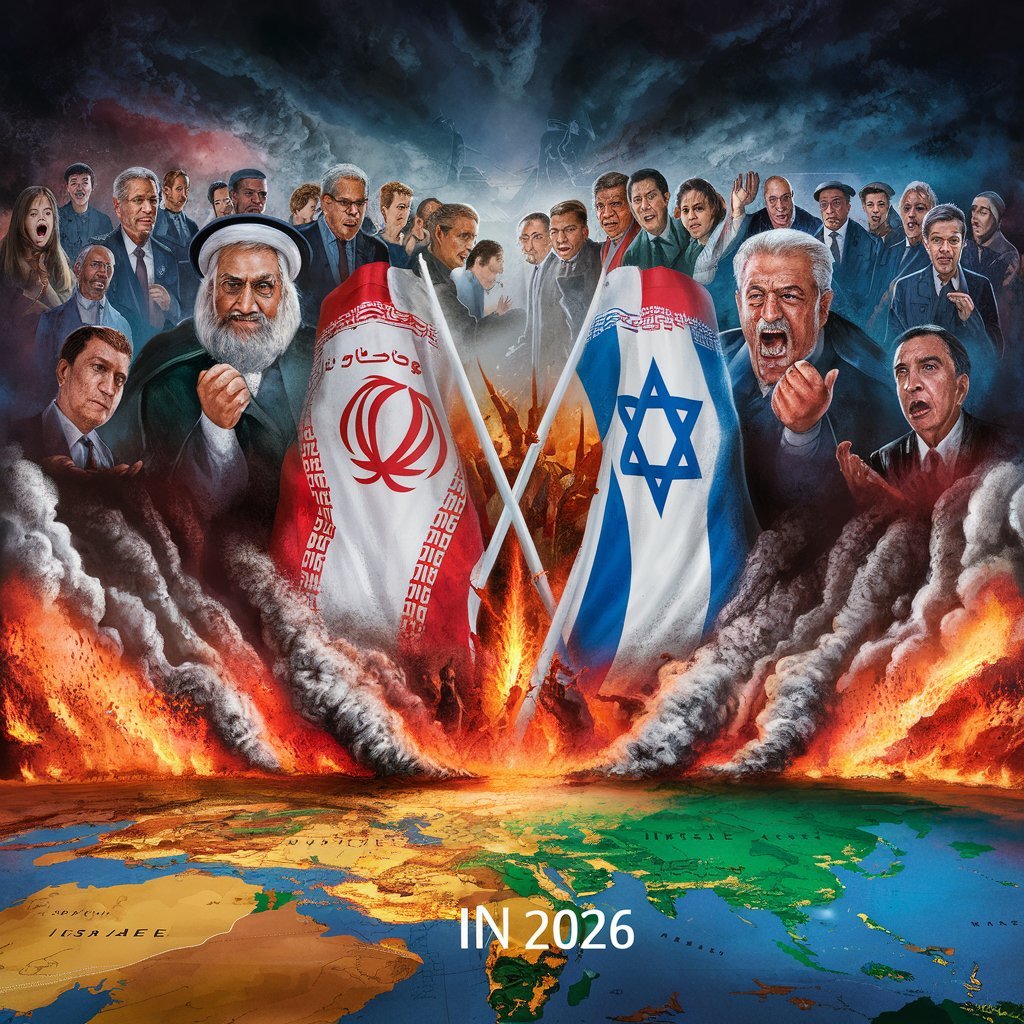
In early 2026, tensions between Iran and Israel erupted into one of the most dangerous and far-reaching escalations in decades, drawing in the United States and reverberating across the Middle East and global geopolitics. What began as covert hostilities and proxy engagements between Tehran and Tel Aviv has transformed into sustained military confrontations involving airstrikes, missile launches, drone attacks, and regional strikes beyond the two nations’ borders. The stakes are high: disruption of global energy supplies, threats to civilian populations, shifting alliances, and intense diplomatic pressures from world powers. This article explores the key developments, underlying causes, regional dynamics, and what the future may hold as the conflict unfolds.
1. Historical Context: Iran–Israel Tensions Before 2026
Long before the current flare-up, Iran and Israel were strategic adversaries defined by rivalry over ideology, regional influence, and security concerns. Iran’s support for armed groups such as Hezbollah and Palestinian factions consistently placed it at odds with Israel’s strategic interests. In past years, hostilities manifested through cyber-warfare, proxy battles, and missile engagements — such as the June 2025 Iranian strikes on Israel and other skirmishes that followed a broader conflict cycle that began after Hamas’s attack on Israel in October 2023.
The region’s instability deepened as diplomatic efforts, including ceasefires and negotiations (like the brief Twelve-Day War ceasefire in mid-2025), repeatedly faltered or were challenged by fresh violence. The backdrop of these historical events is essential to understanding why the 2026 escalation did not occur in isolation but rather as the culmination of years of simmering distrust and military posturing.
2. The 2026 Escalation: Military Strikes and Retaliation
Late February 2026 marked a defining flashpoint when joint airstrikes by the United States and Israel targeted key Iranian military and strategic positions, triggering immediate and far-reaching retaliation from Iran. These strikes reportedly included attacks on command centers, infrastructure, and vertical power structures within Tehran. Iran responded with hundreds of missile and drone launches against Israeli targets and U.S. forces stationed across the region, leading to a dramatic widening of hostilities.
The conflict’s intensity was underscored by reports from Iran of missile barrages and by Israel’s counter-offensives on Iranian missile infrastructure and command installations. This cycle of attack and response has extended beyond conventional battlefields, with strikes reaching into neighbor states and virtual maritime chokepoints such as the Strait of Hormuz — a vital artery of global energy trade.
3. Regional Spillover: Beyond Borders
One of the most concerning aspects of the 2026 conflict is its spillover beyond Iran and Israel. Iranian forces and allied proxies, such as Hezbollah in Lebanon, have engaged in strikes against Israeli territory and military positions, prompting Israeli responses deep inside Lebanese territory. Smaller Gulf states, including the United Arab Emirates, have been drawn into the fray indirectly — intercepting missiles and drones launched by Iran toward civilian and military installations.
The fighting has also affected civilian infrastructure: airports in the Gulf were temporarily closed, non-combatants were displaced, and diplomatic missions — including U.S. embassies — were targeted by Iranian-aligned forces. This regional spread has worried global leaders, not just because of human costs but because of broader geopolitical destabilization.
4. Global Implications: Energy, Diplomacy, and Economy
The crisis has had immediate consequences for international markets and diplomacy. Oil prices surged amid fears of prolonged disruption around shipping in the Strait of Hormuz, where a significant share of the world’s energy supplies transit. Investors reacted to the rising geopolitical risk, triggering volatility in energy and global equity markets.
Diplomatic engagement intensified as world powers — including the United States, Gulf Cooperation Council (GCC) members, and European nations — attempted to de-escalate tensions. The conflict is forcing reevaluations of defense postures, alliances, and security guarantees across the Middle East and beyond. However, to date, no lasting diplomatic breakthrough has emerged to halt the hostilities.
5. The Human Toll: Civilians on the Front Lines
Beyond geopolitical and military calculations, the human cost of the Iran–Israel conflict has been profound. Reports indicate that scores of civilians, including families and children, have been killed or injured amid bombardments. Infrastructure damage — from homes to healthcare facilities — highlights the immense suffering and displacement faced by ordinary people caught in the conflict. The unpredictability of missile and drone strikes has also generated widespread trauma and exacerbated humanitarian needs in Iran, Israel, and neighboring states.
Conclusion
The Iran–Israel news landscape in 2026 reflects a conflict that is neither distant nor contained. Instead, it has become a defining flashpoint of 21st-century geopolitics, drawing in major powers, straining regional alliances, and challenging long-held assumptions about security in the Middle East. As the situation evolves, the world watches closely: the balance between continued confrontation and urgent diplomacy could determine not only the future of Iran and Israel but also the wider stability of the region.
Frequently Asked Questions
1. Why did the Iran–Israel conflict intensify in 2026?
The escalation followed coordinated U.S. and Israeli military strikes on Iranian military infrastructure in late February 2026, prompting sharp retaliation from Iran with missiles and drones targeting Israel and U.S. forces in the region.
2. Are other countries involved in the conflict?
Yes. Iran has launched attacks affecting Gulf states such as the UAE, and Lebanese militant groups aligned with Tehran have engaged Israeli positions. Regional powers are attempting to manage the spillover and diplomatic repercussions.
3. How has the conflict impacted global oil and shipping?
Violence near critical trade routes like the Strait of Hormuz has disrupted maritime traffic and pressured energy markets, leading to higher oil prices and economic unease.
4. What efforts are being made to de-escalate tensions?
Diplomatic efforts involve the United States, Gulf states, and international partners, but as of now, no definitive truce or ceasefire has been established.
5. How are civilians affected?
Civilians in Iran, Israel, and surrounding regions have experienced casualties, displacement, and damage to infrastructure due to missile strikes and aerial bombardment.
