
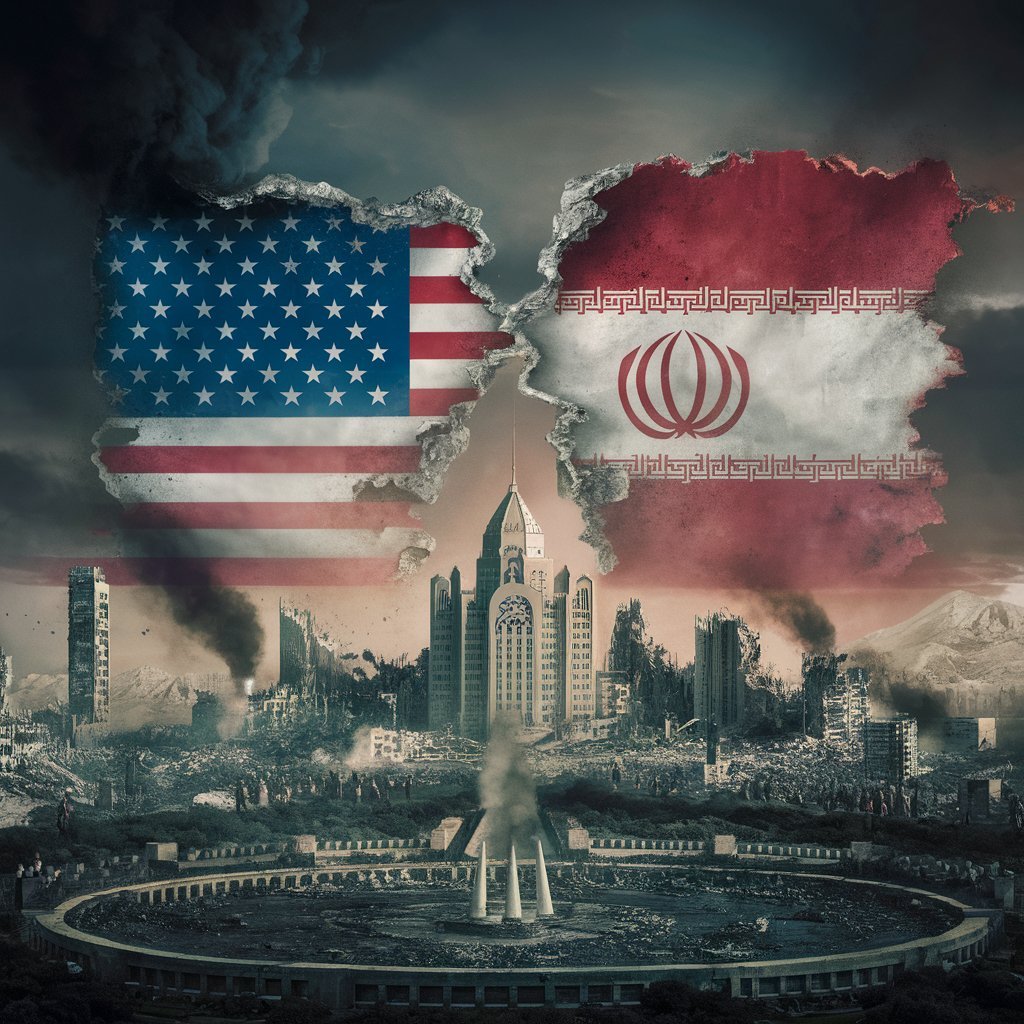
The sudden and intense military confrontation between the United States and Iran in early 2026 marks one of the most significant escalations in decades in Middle Eastern geopolitics. After years of proxy conflicts, economic sanctions, and intermittent hostility, the situation exploded on February 28, 2026, when US and Israeli forces launched a coordinated attack on Iranian territory. The offensive, reportedly named “Operation Epic Fury” by US planners, involved airstrikes with advanced weaponry, missiles, and drones aimed at crippling Iran’s military infrastructure and reducing its capacity to threaten regional stability. In the opening wave of strikes, Iran’s Supreme Leader Ayatollah Ali Khamenei and other senior officials were reported killed — a development that underlines just how dramatic and consequential these attacks are. The conflict has since spread beyond Iran’s borders, reverberating across the Gulf, disrupting global energy markets, and eliciting strong international reactions.
Historical Context: US–Iran Relations and Past Military Engagements
To fully grasp why the United States has attacked Iran, one must look at the long and often fraught history between the two nations. Diplomatic relations collapsed after the 1979 Iranian Revolution, when Tehran turned sharply against US influence in the region. Over subsequent decades, tensions played out through proxy wars, sanctions, and cyber-attacks rather than direct military engagement. Significant historical episodes include US naval clashes in the 1980s during the Iran-Iraq War, such as Operation Praying Mantis — a retaliatory strike against Iranian naval forces that left several vessels destroyed — and Operation Nimble Archer, where the US destroyed Iranian oil platforms used for military purposes. These actions illustrated longstanding hostility and set precedents for force being used in direct confrontation with Tehran.
Despite these earlier clashes, no major direct assault on Iranian soil had occurred since then — until recent months. Some scholars also point to US actions in 2025 during the Twelve-Day War, when American forces supported Israeli strikes on Iranian nuclear facilities in Fordow, Natanz, and Isfahan. That earlier intervention aimed to degrade Tehran’s nuclear program and sow strategic disruption, and may have laid the groundwork for deeper involvement in 2026.
Triggers Behind the 2026 Attacks
The immediate catalyst for the 2026 US-led attacks was a complex set of military, political, and strategic factors. Officials in Washington argued that Iran’s nuclear ambitions, its support for regional militant groups, and its missile programs posed imminent threats to US allies, particularly Israel and Gulf states. With tensions already high due to escalating incidents across the region, the US determined that pre-emptive strikes were necessary to blunt these perceived dangers. In coordination with Israeli forces, the United States unleashed a series of attacks that targeted IRGC command centers, air defense systems, and strategic infrastructure believed to support ballistic missile launches.
Political dynamics also played a role. The Trump administration framed the offensive as a decisive response to years of hostile Iranian activity and a means of preventing Tehran from achieving nuclear weapon capability. With ongoing domestic debates about energy prices, national security, and Middle East policy, the administration’s strategic calculus involved demonstrating military resolve while attempting to manage regional escalation.
The Course of the 2026 Conflict
Once the military operation began, the conflict rapidly expanded beyond initial strikes. Iran launched retaliatory missile and drone attacks against US military bases and allied positions in Gulf states, including Kuwait and Qatar, leading to casualties among US service members and damage to regional assets. While the United States and Israel reported extensive damage to Iranian military infrastructure, Tehran’s responses showed that it retained significant offensive capabilities, striking back with waves of missiles and drones.
International commercial activities were also disrupted, especially in the Strait of Hormuz — a vital passage for global oil shipments — where tensions threatened shipping safety and contributed to volatility in energy markets worldwide. Airspace closures and flight cancellations became common as the fighting intensified.
Global Responses and Legal Debate
The US-Iran conflict has sparked a vigorous global reaction. Nations in the Global South, including China, Brazil, South Africa, and Pakistan, condemned the attacks as violations of international law and threats to regional stability. Many critics argued that the assaults lacked clear UN Security Council authorization and therefore breached the UN Charter’s prohibition on aggressive warfare. While some Western allies expressed concern about economic ramifications and the lack of a post-conflict strategy, others supported the US and Israeli rationale for confronting potential nuclear threats.
The legal debate is not merely academic — questions about international legality, sovereignty, and the rules governing pre-emptive self-defense continue to shape diplomatic discourse around the conflict. Some human rights experts and international lawyers contend that without a direct, imminent attack by Iran, the US and Israeli strikes may constitute illegitimate force under international standards.
Economic and Human Impact
The conflict’s human cost has been severe. Civilian casualties in Iranian cities have been reported in the hundreds due to airstrikes, including incidents that have struck civilian infrastructure. On the American side, military personnel have also been killed and wounded in retaliatory engagements, further entrenching public concern and political debate within the United States.
Economically, disruption in the Strait of Hormuz contributed to higher global oil prices, affecting markets from the United States to Asia and Europe. With a significant percentage of the world’s energy supply transiting the strait, the conflict’s impact on shipping safety and insurance costs added pressure to energy markets already sensitive to geopolitical instability.
Conclusion: A Turning Point in Middle East Geopolitics
The 2026 US attacks on Iran, conducted alongside Israeli forces, represent a pivotal moment in modern geopolitics. Far from a simple military engagement, this conflict embodies decades of mistrust, strategic competition, and unresolved tensions between Washington and Tehran. The scale and intensity of the operation have not only reshaped diplomatic relations in the Middle East but also reignited discussions about the rules of war, the efficacy of force in international relations, and the future of nuclear non-proliferation. As the conflict continues with no clear end in sight, its ramifications are likely to be felt for years — both in Middle Eastern societies deeply affected by violence and across the complex web of global alliances and economic interdependence.
Frequently Asked Questions (FAQs)
1. Why did the United States attack Iran in 2026?
The United States argued it acted to neutralize what it saw as imminent threats from Iran’s nuclear program and missile capabilities, coordinating with Israel to disable infrastructure believed to support future aggression. These actions followed escalating regional tensions and were described as pre-emptive defense by US officials.
2. Was Iran’s leader killed in the attacks?
Yes — reports indicate that Iran’s Supreme Leader, Ayatollah Ali Khamenei, was killed during the initial US-Israeli strikes, a development that greatly intensified the conflict and triggered widespread regional retaliation.
3. How has the international community reacted?
Responses have been mixed: many nations condemned the attacks for lacking legal justification and risking broader war, while some US allies expressed support for confronting perceived threats from Iran. The conflict has also drawn calls for restraint and urgent diplomatic negotiations.
4. What has been the human cost of the conflict?
Both civilian and military casualties have occurred. Hundreds of Iranian civilians have died in airstrikes, and several US service members have been killed or wounded in retaliatory engagements, underscoring the severe human toll of the crisis.
5. What are the economic effects of the US attacks on Iran?
Global energy markets have reacted strongly, with oil prices rising due to threats to shipping in the Strait of Hormuz and broader instability. Commercial flights and trade routes have also faced disruptions, adding to economic uncertainty.
