
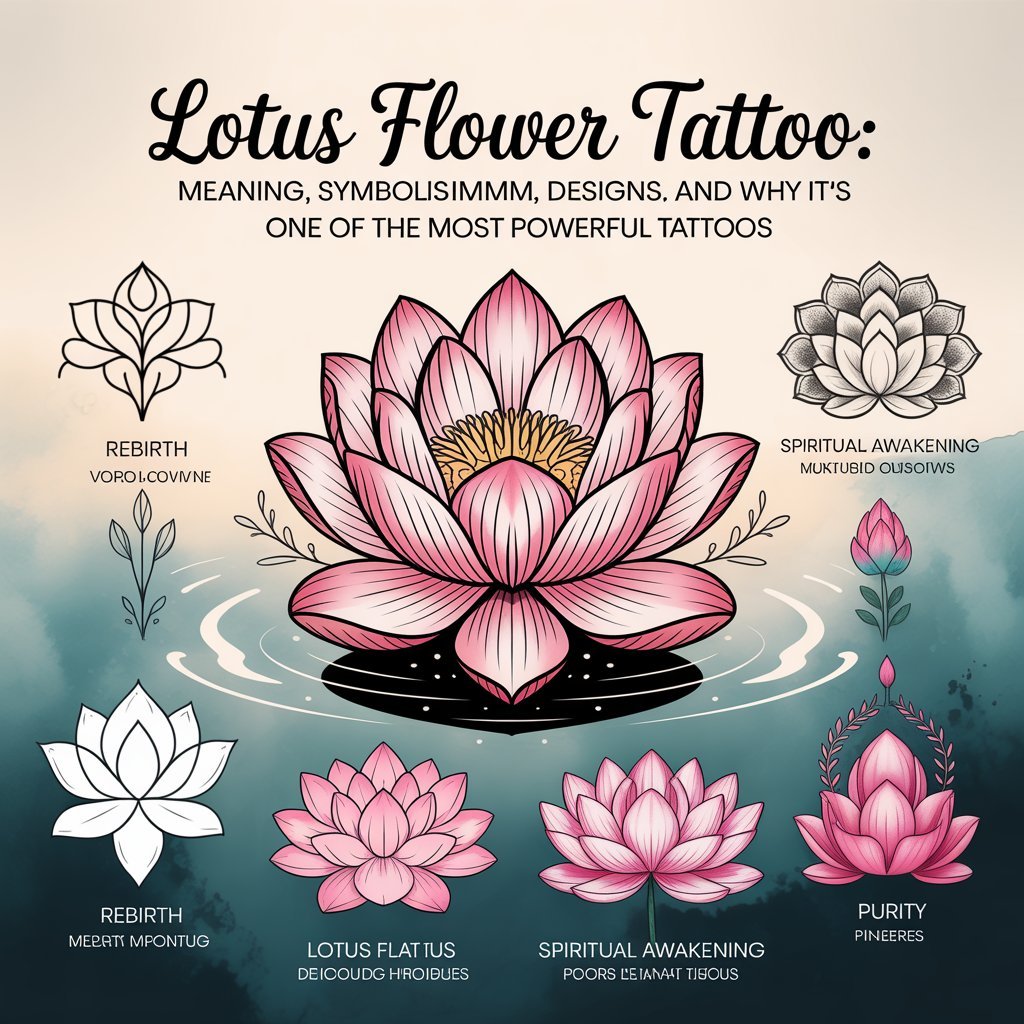
A lotus flower tattoo is far more than a beautiful body art design; it is a deeply meaningful symbol that has been cherished across cultures, religions, and artistic traditions for centuries. The lotus flower grows in muddy, murky water yet rises above the surface to bloom clean and radiant, untouched by the dirt below. Because of this unique natural process, the lotus flower tattoo has become a universal symbol of resilience, spiritual awakening, rebirth, and inner strength. People choose lotus flower tattoos not only for their elegant appearance but also for the powerful personal stories they represent, making them one of the most timeless and emotionally rich tattoo choices in the world.
Lotus Flower Tattoo Meaning and Symbolism
The meaning of a lotus flower tattoo is rooted in the idea of transformation and personal growth. Since the flower emerges from mud and blooms into something pure and beautiful, it symbolizes the ability to overcome struggles, pain, and difficult circumstances. Many people get a lotus flower tattoo to mark a period of healing, recovery, or a fresh start in life. It represents rising above negativity and remaining grounded while striving toward clarity, peace, and self-improvement. For some, the lotus flower tattoo serves as a reminder that even when life feels heavy or chaotic, beauty and strength can still emerge from within.
Spiritual and Cultural Significance of Lotus Flower Tattoo
The spiritual significance of a lotus flower tattoo varies across different cultures, but its core symbolism remains powerful and positive. In ancient Egyptian culture, the lotus symbolized rebirth and the cycle of life. Because of these deep spiritual connections, a lotus flower tattoo is often chosen by individuals seeking a design that reflects faith, inner peace, and a higher sense of purpose.
Popular Lotus Flower Tattoo Designs
Lotus flower tattoo designs come in a wide range of styles, allowing people to personalize the symbol according to their taste and story. Some prefer minimalist lotus tattoos with clean lines and subtle shading, representing simplicity and balance. Others choose detailed mandala lotus flower tattoos, which combine sacred geometry with the lotus symbol to reflect harmony and spiritual alignment. Watercolor lotus flower tattoos are also popular, using soft color splashes to create a dreamy and artistic effect. Whether designed as a small, delicate tattoo or a large, intricate piece, the lotus flower adapts beautifully to different artistic styles while retaining its powerful meaning.
Lotus Flower Tattoo Colors and Their Meanings
The color of a lotus flower tattoo can add an extra layer of symbolism and emotional depth. A white lotus flower tattoo represents purity, spiritual perfection, and mental clarity. A pink lotus flower tattoo is often associated with the Buddha and symbolizes divine love and enlightenment. Blue lotus flower tattoos represent wisdom, knowledge, and self-control, making them popular among those focused on personal growth. Purple lotus flower tattoos are linked to mysticism and spirituality, while red lotus flower tattoos symbolize passion, love, and compassion. Choosing the right color allows the tattoo to reflect both aesthetic preferences and personal values.
Best Placement Ideas for Lotus Flower Tattoo
The placement of a lotus flower tattoo can enhance its meaning and visual impact. Many people choose areas such as the forearm, shoulder, or upper back to showcase the symmetry and elegance of the design. A lotus flower tattoo on the chest or near the heart often represents emotional healing and inner strength. Smaller lotus tattoos placed on the wrist, ankle, or behind the ear offer a subtle yet meaningful reminder of personal growth. Large placements like the spine or thigh allow for detailed artwork and symbolism, especially when combined with mandala or geometric elements.
Why Lotus Flower Tattoos Are So Popular
The popularity of lotus flower tattoos continues to grow because they combine beauty, versatility, and deep symbolism in a single design. Unlike trend-based tattoos that may lose relevance over time, the lotus flower tattoo holds a timeless appeal that resonates across ages and cultures. It suits both men and women and can be adapted to various styles, from bold and traditional to soft and modern. Most importantly, the lotus flower tattoo connects deeply with personal journeys, making it a meaningful choice for people who want their tattoo to represent growth, strength, and spiritual balance.
Conclusion: Is a Lotus Flower Tattoo Right for You?
A lotus flower tattoo is an ideal choice for anyone seeking a design that is visually stunning and emotionally significant. It represents resilience, renewal, and the ability to rise above challenges, making it a powerful symbol of personal transformation. Whether chosen for its spiritual roots, cultural meaning, or simple beauty, a lotus flower tattoo carries a message that remains relevant throughout life. If you want a tattoo that tells a story of strength, peace, and self-discovery, the lotus flower is a timeless and meaningful option.
Frequently Asked Questions (FAQs)
What does a lotus flower tattoo symbolize?
A lotus flower tattoo symbolizes purity, rebirth, spiritual growth, and the ability to overcome adversity. It reflects rising above difficult circumstances and achieving inner peace.
Is a lotus flower tattoo religious?
A lotus flower tattoo can be religious, especially in Buddhism and Hinduism, but it does not have to be. Many people choose it for personal or spiritual reasons without religious intent.
Are lotus flower tattoos suitable for men and women?
Yes, lotus flower tattoos are completely unisex. The design can be customized to suit masculine, feminine, or neutral styles depending on size, color, and detail.
Does the color of a lotus flower tattoo matter?
Yes, different colors carry different meanings. White symbolizes purity, blue represents wisdom, pink is linked to enlightenment, and red reflects love and passion.
Where is the best place to get a lotus flower tattoo?
The best placement depends on personal preference and design size. Common areas include the forearm, back, shoulder, wrist, chest, and spine.
